


U.S.-Israeli War on Iran To Slow Germany’s Economic Growth: Ifo
X/ @GBAFReview
March 12, 2026 Hour: 8:05 am
🔗 Comparte este artículo
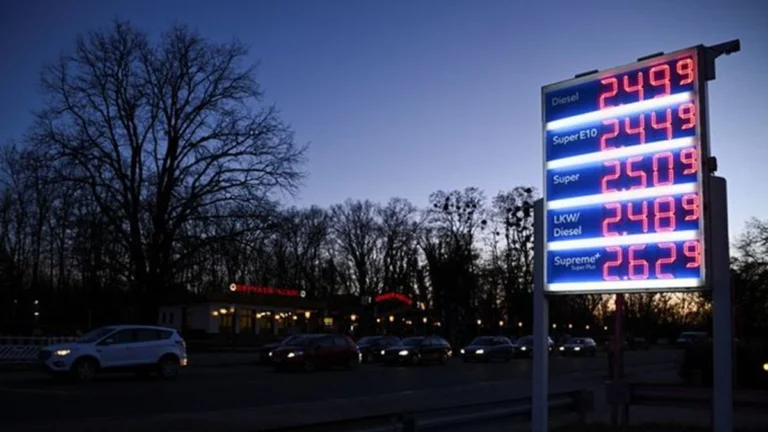
Energy price could reduce economic growth to 0.6% in 2026 if inflation rises.
On Thursday, the Institute for Economic Research (Ifo) published a study showing that the U.S.-Israeli war on Iran will slow the German growth in 2026.
RELATED:
Iraq Appeals for Maritime Safety After Tankers Attacked in Its Waters Amid Regional Escalation
After two years of recession and very slight GDP growth of 0.2% in 2025, Ifo had planned to revise its winter macroeconomic forecast upward by two-tenths of a percentage point, from 0.8% to 1% for this year.
But the U.S.-Israeli war on Iran, which has spread to other countries in the Middle East and the Persian Gulf, has forced the institute to adopt a more cautious stance.
The original forecast of 0.8% growth for 2026 and 1.2% for 2027 could still hold, but only under a de-escalation scenario. That would mean the increase in energy prices is short-lived, prices return to normal by May, and there are no disruptions to global supply chains.
“Right now we are assuming an increase in the inflation rate to 2.5% if oil and gas prices fall again in the coming weeks,” said Ifo’s head of economic forecasts, Timo Wollmershäuser.
In February, the inflation rate stood at 1.9% compared with the same month last year, according to figures confirmed the previous day by Germany’s Federal Statistical Office, Destatis.
However, if fossil fuel prices remain sharply elevated at current levels for a longer period, inflation could rise to a peak of 3%. That would reduce growth by another two-tenths to just 0.6% in 2026 and by four-tenths to 0.8% in 2027.
Unlike the situation Germany faced in 2022 after the outbreak of the war in Ukraine, the central European country is not confronting a shortage of gas or fuel in this case, but rather a rise in global prices.
Ifo noted that by the end of 2025 the German economy had finally begun a recovery path after contracting by half a percentage point in 2024, reflected in factors including an increase in orders for industry and construction.
Wollmershäuser expects this trajectory to continue despite the U.S.-Israeli war on Iran, particularly because demand is being boosted by government investment in infrastructure, climate neutrality and defense.
However, Ifo said this is not a typical recovery for Germany, as it is not being driven by exports — which contracted by 0.4% in 2025 and even in the prewar scenario would have grown only 0.4% in 2026 — but by public spending and the government’s fiscal policy.
Meanwhile, Ifo expects the expansion of the economy to reach the labor market with a delay. Even before the offensive against Iran, it projected that the unemployment rate would not fall below the current 6.3% until 2027, and it could rise by one-tenth of a percentage point if fossil fuel prices do not fall soon.
teleSUR/ JF
Sources: EFE – Ifo